Maurius Muzé | Poetic literature romance author
Maurius Muze is a poetic literature fantasy author writing immersive character - driven exploring power, identity, romance and myth.

Literary Titan review
NetGalley campaign
Introduction….
Welcome to the official website of MauriuS Muze, an author exploring the darker edges of imagination through immersive, character - focused storytelling. Blending atmosphere, tension and emotional depth, these stories delve into power, identity and the unseen forces that shape our world.
I carry your heart with me
by E E Cummings
I carry your heart with me (I carry it in my heart)
I am never without it (anywhere
I go you go, my dear; and whatever is done
by only me is your doing, my darling)
I fear no fate (for you are my fate, my sweet)
I want no world (for beautiful you are my world, my true)
and it’s you are whatever a moon has always meant
and whatever a sun will always sing is you
Here is the deepest secret nobody knows
(here is the root of the root and the bud of the bud
and the sky of the sky of a tree called life; which grows
higher than soul can hope or mind can hide)
and this is the wonder that’s keeping the stars apart
I carry your heart (I carry it in my heart)
Dedication to the readers
“IN LOVE” (The essence of true existence.)
To all the souls that wander the hearts that stirred for more and to those who gifted kindness to others, but none returned with compassion.
To all the bravest with all their might may this book inspire you to rise and embrace your boldest desires for self-fulfilment.
MauriuS represents the internal struggle we all face, while the Muze inspires the essence of who you truly are. Seek the self-worth that lies within you; your worth is far greater than you realise. When the foundation of yourself calls for you to rise, “YOU RISE". The warrior in you will guide you through darkness. Transcend the pain and discover that inner strength that empowers you with the extraordinary courage only you can provide for yourself. "Embrace life fully; merely existing without passion will not satisfy the soul's restless yearning." Simply existing can become a shackle that confines your journey. One day, when everything is laid bare, you will need to account for your own life.
“Was it worth it?” So go and take the flight on the voyage of life. Nothing is more important than staying true to yourself and being transparent with divine decree toward your destination.
This dedication is for all who have shown humanitarian qualities, as their kindness is often overshadowed by malicious and ruthless behaviour. From one human being to another.
—your author
About the Author
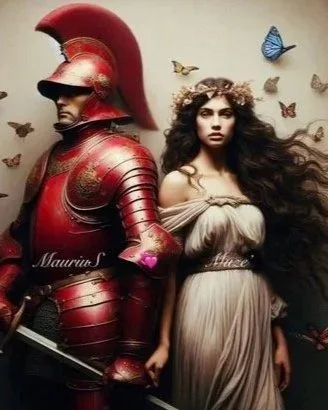
“Ink from a War God. Words from a Muse”
MauriuS Muze' is a voice born between worlds, where war meets wonder, and love stretches beyond the stars. Their work is steeped in the mythic and the intimate, blurring the line between the divine and the human, the masculine and the feminine. Drawing inspiration from ancient gods and eternal muses, Muze' writes of soul-bound lovers, timeless longing, and the fragile beauty of connection across dimensions.
Very little is known about the figure behind the name. Some say MauriuS was once a soldier of forgotten skies; others call them a vessel for the muse itself. What is certain is this: every word they write hums with the ache of cosmic love and the quiet truth that we are never truly alone.
MauriuS Muze’ embodies a literary persona, a mythic, gender-blended author who writes of love across galaxies, gods, and souls.
Gender Power, which combines the masculine and feminine, transcends traditional gender boundaries, mirroring the theme of love that extends beyond space, time, and earthly limitations. Creating intrigue, readers will naturally wonder: Is this author a man? A woman? Or something else entirely?
The author asks that you, the reader, position yourself as the voice of both the lover and the beloved, both the passionate and the poetic. This opens the door for Universal relatability (any reader can see themselves in the voice of MauriuS Muze – a timeless mystery, like an oracle or cosmic poet who exists outside definition.
“MauriuS”
Power, war, masculinity, and the cosmic force of desire and battle.
“Muze”
The feminine divine, the source of poetic inspiration, the unseen muse that stirs the soul to create.
That duality of war and love, force and passion, power and poetry, is timeless, and it speaks of:
💞“Love Beyond the Realm of the Universe.” 💞

Two Hearts Within One Soul: Volume 1 frames love not as coincidence but as cosmic decree, a bond the gods designed before the characters were born. What drew you to that metaphysical architecture rather than a conventional romance structure?
Conventional romance is about the ego, but I focus on the Return. My architecture is built on the 8 frequency—a mathematical heartbeat that proves love is a cosmic decree. I am exploring the ‘Zeus Theory’: the idea that we were once eight-limbed, invincible beings split into four-limbed fragments. We aren’t looking for a ‘partner’; we are survivors of a divine accident looking for our own missing limbs. It is a biological and spiritual necessity to find the only person who holds the rest of our original symmetry.
Classical music and ballet are woven into the novel’s emotional fabric. Why did those art forms feel like the right language for this love story?
Words are ‘four-limbed’—heavy and limited. Music is the rhythm of the soul captured through thoughts, allowing us to hear beauty in a lyrical tone. If the eyes are the windows to the soul, then the ballerina’s movement is the art that allows us to see that soul’s rhythm move through the physical body. A Mozart aria or a pirouette is an ‘eight-limbed’ reach back toward our lost divinity, allowing the characters to communicate in a frequency where the split hasn’t happened yet.
The idea of becoming “habitable to yourself again” after devastating loss is the emotional core of the book. Was that theme the origin of the novel, or did it emerge through writing these two characters?
It was the origin—an act of survival. When you lose the love that made you feel whole, you feel unoccupied, like a house with no one inside. Writing this was my way of ‘rebuilding the temple,’ proving that the missing rooms of the soul are still there, held in the vibration of the other half. To be ‘habitable’ means making peace with the four-limbed skin we are trapped in while we wait for a reunion (oneself) that is already written in the stars.
This is Volume 1. What does the series hold that this book is only beginning to reveal about these souls, this bond, and the cost the gods mentioned?
The series is a grand odyssey through the entwining of Heaven, Hell, and Earth as well as exploring power and greed. Volume 1 was the ‘Phantom Ache’ of the split. Volume 2 explores the resilience of the caterpillar—the quiet strength required to endure the weight of the human form and the darkness of grief.
Finally, Volume 3: ️Explains the origin of 888.
We journey to the African Baobab tree of life and the Egyptian Underworld, mirroring Isis’s search for the pieces of Osiris and the Southeast Asian myth of the Sun and Moon to prove that no love is impossible. This journey doesn’t just take a lifetime; it takes eternity after eternity. Across time and space, love that is made of Heaven and Earth belongs to the end of time. It reveals that the circle of life is the Art of the Heart: ‘LOVE.’
Literary Titan Interview with author for Volume 1
Independent Book Review
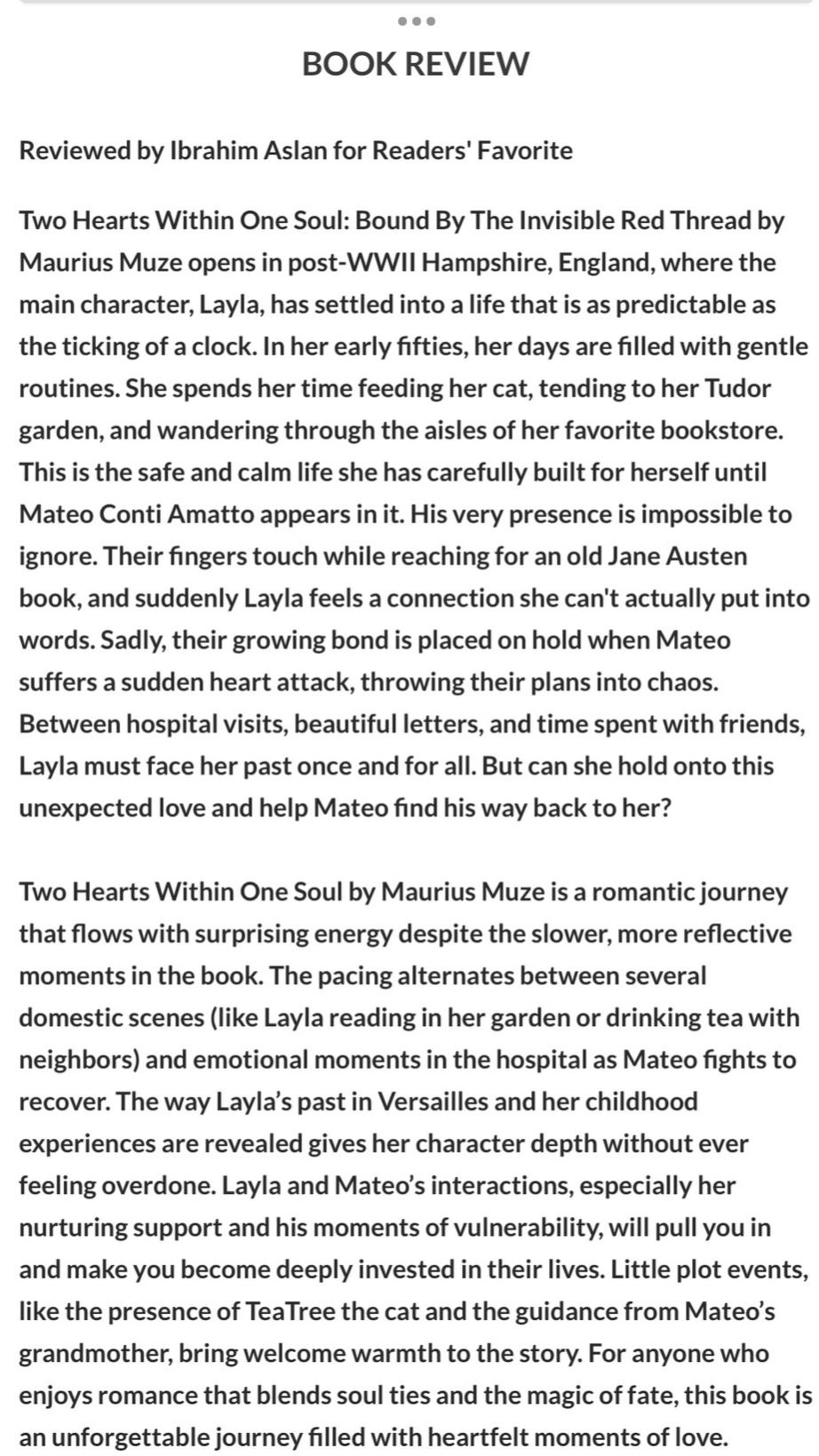
Reviewed by Erin Britton
A lyrical, lovely, and unconventional 50+ romance
MauriuS Muze’s Bound By The Invisible Red Thread, the second volume in theTwo Hearts Within One Soul series, is a novel that wears its heart on its sleeve. From the opening dedication—“When your soul calls for you to rise, ‘YOU RISE.’”—it is clear that, like the preceding volume, the book is no conventional romance.
It is a book less concerned with plot mechanics and character development than with emotional intensity, spiritual connection, and the metaphysics of love. The result is a heightened, almost dreamlike narrative in which romance becomes destiny and destiny becomes transcendence.
The premise is deceptively simple. Layla, a cat-loving woman in her early fifties who has lived a quiet, solitary life shaped by loss and endurance in Hampshire, England, meets Mate’O, a wealthy French–Italian vintner burdened by familial expectations and emotional isolation.
Their meet cute—both reaching for the same Jane Austen novel in a quaint Winchester bookshop—is rendered as a moment of cosmic awareness. Hands brush. Eyes meet. Time unfolds. What follows is not merely attraction but what Muze’ terms “recognition”—it is as if they have met before or always been destined to meet.
Muze’ leans heavily into this idea of soul-deep inevitability. For instance, Mate’O reflects on Layla’s gaze: “It wasn’t just love […] It was recognition. Like the stars had planned it long before we were entwined.” His sentiment encapsulates the novel’s governing philosophy. In the world of Two Hearts Within One Soul, love is neither gradual nor uncertain.
Instead—like the king and the ballerina from volume one already discovered—love is preordained, ancient, and woven by the eponymous “invisible red thread.” Muze’ borrows this concept from East Asian folklore but reframes it through a Western romantic lens to portray the relationship between Layla and Mate’O.
Fittingly, one of Bound By The Invisible Red Thread’s strengths lies in its tonal consistency. From the whimsical early scenes—bees causing chaos in Layla’s garden, her cat TeaTree and squirrel Squeezy forming an unlikely alliance—to the heightened romantic declarations in exchanged letters and poems, the narrative inhabits a stylized world.
Reality is softened for Layla and Mate’O, at least sometimes. Even panic has a theatrical quality. Layla dons a beekeeper’s hat and oven gloves “just in case she needed to defend herself,” causing her to resemble Joan of Arc. These scenes are charmingly eccentric, and they establish a tone of fable rather than realism.
Yet beneath the whimsy is a serious emotional undercurrent. Layla’s backstory—an orphan from France who worked as a maid at the Versailles Palace Hotel before moving to England—grounds her in resilience and quiet longing. Her life has been defined by endurance rather than fulfillment.
Muze’ frames her meeting with Mate’O as a turning point not just romantically but also existentially. “He bestows upon her courage, resilience, and the tenacity to set her on her path to self-love and self-worth.” Love, in this story, is transformative in the most literal sense: it awakens dormant identity.
Mate’O, for his part, is drawn as a figure of romantic excess. A wealthy vineyard heir from Bordeaux, handsome and cultured, secretly devoted to opera and classical romance novels, he is almost archetypal in his construction. He is weighed down by parental expectations and the pressure to expand the family’s vineyard empire.
But where another novel might complicate his identity further with moral ambiguity, Muze chooses purity of feeling. Mate’O’s defining trait is his belief that love must be “spectacular, consumed, filled with soul connections.” He is not cynical. He is patient, biding his time until he encounters the one.
Relatedly, part of the novel is structured around the lovers’ written declarations—Layla’s poem “Love Me” and Mate’O’s epistolary response. These passages are pivotal, and they showcase Muze’s commitment to overt romanticism. As Layla writes, “Love me as you love your home, so I will know what home feels like in your heart.”
The repetition is intentional and incantatory. Love is defined through metaphors of earth, rain, champagne, lions, and gardens. It is expansive, devotional, almost liturgical. Mate’O responds in kind, describing their bond as “A lifetime of LOVE through eternity.” The capitalization is deliberate—this is declaration, not irony.
This intensity is relentless. Bound By The Invisible Red Thread rarely permits emotional ambiguity. Love is absolute. Recognition is instant. Devotion is total. Even when tragedy intrudes—Mate’O’s sudden cardiac crisis on the way to his first date with Layla—the event is framed less as medical drama and more as cosmic interruption.
Layla’s vigil is one of the novel’s most affecting scenes. She waits beside a meticulously prepared high tea—scones, cheesecake, Earl Grey with “fine, silky milk and honey”—as daylight fades. When she realizes he will not arrive, her disappointment is both simple and devastating.
Unaware of Mate’O’s illness, she states simply to a friend: “He didn’t come, Lucia.” The repetition of her disappoint carries genuine pathos. In that moment, the grand metaphysics of the invisible red thread contract into the very human ache of being stood up, of hope dissolving into dusk.
Stylistically, Muze favors grand description and repetition to convey scale and importance. Gardens are symphonies of foxgloves, snowdrops, buttercups, Gertrude Jekyll roses. Emotions are named, intensified, capitalized. The language sometimes spills over into melodrama, but it is rarely insincere.
What is perhaps most interesting is the age of its heroine. Layla is in her early fifties. In a genre often dominated by youthful protagonists, this choice feels quietly radical. Her love story is not a first awakening of adolescence but a second flowering of a life long constrained. Thus, Muze’ insists that passion, destiny, and transformation are not age-bound.
The supporting characters—Lucia, Oliver, the menagerie of animals—provide warmth and grounding. Lucia’s pregnancy and domestic solidity contrast with Layla’s romantic longing while also underscoring themes of continuity and rebirth. The animals, particularly Squeezy and TeaTree, add a fairy tale softness that cushions the more operatic emotional moments.
Ultimately, Bound By The Invisible Red Thread is less concerned with realism than with emotional absolutism. It requires acceptance that some connections are ancient, that some glances are destiny, and that love can quite literally stop the heart. Whether read as spiritual allegory, romantic fantasy, or earnest melodrama, there is no doubting its conviction.
Volume One - Two Hearts Within One Soul
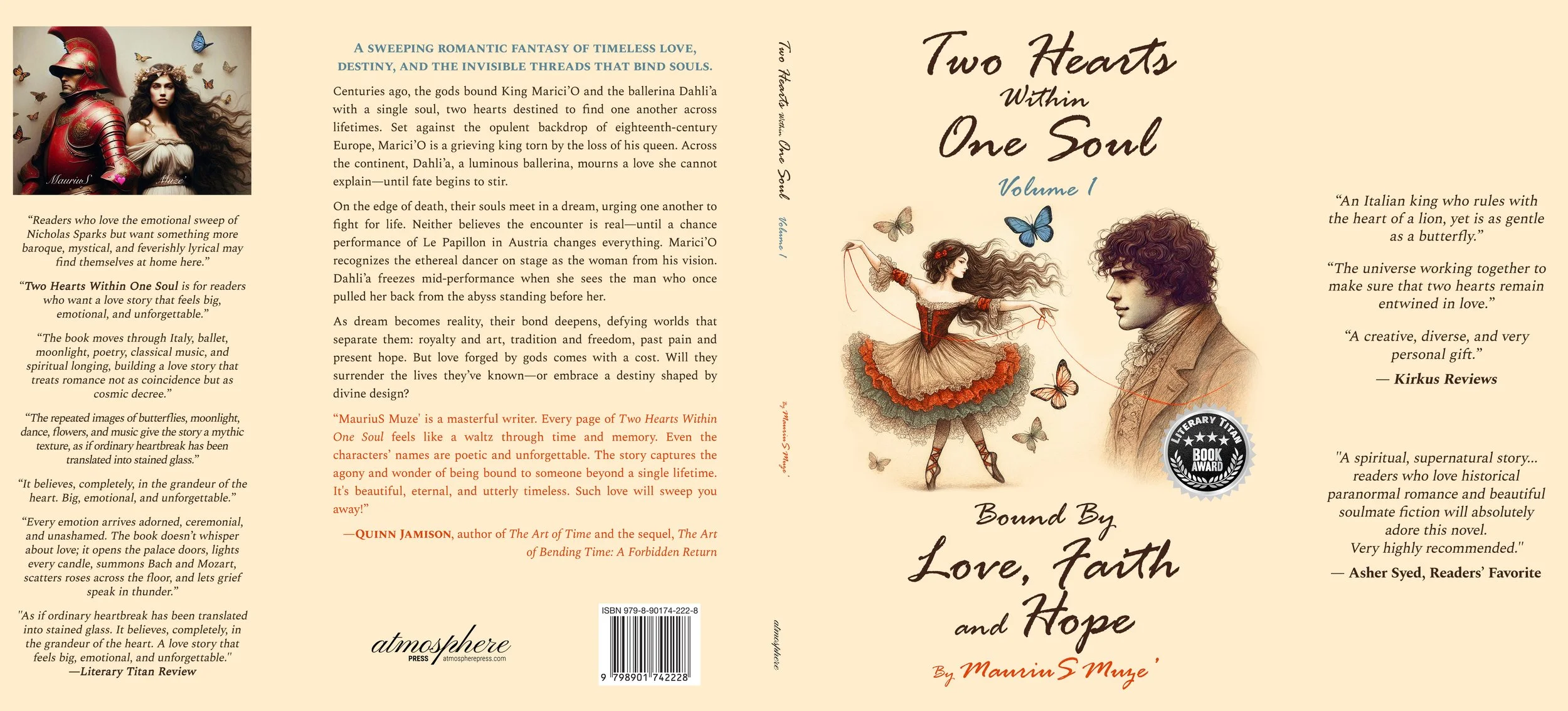
About Volume 1
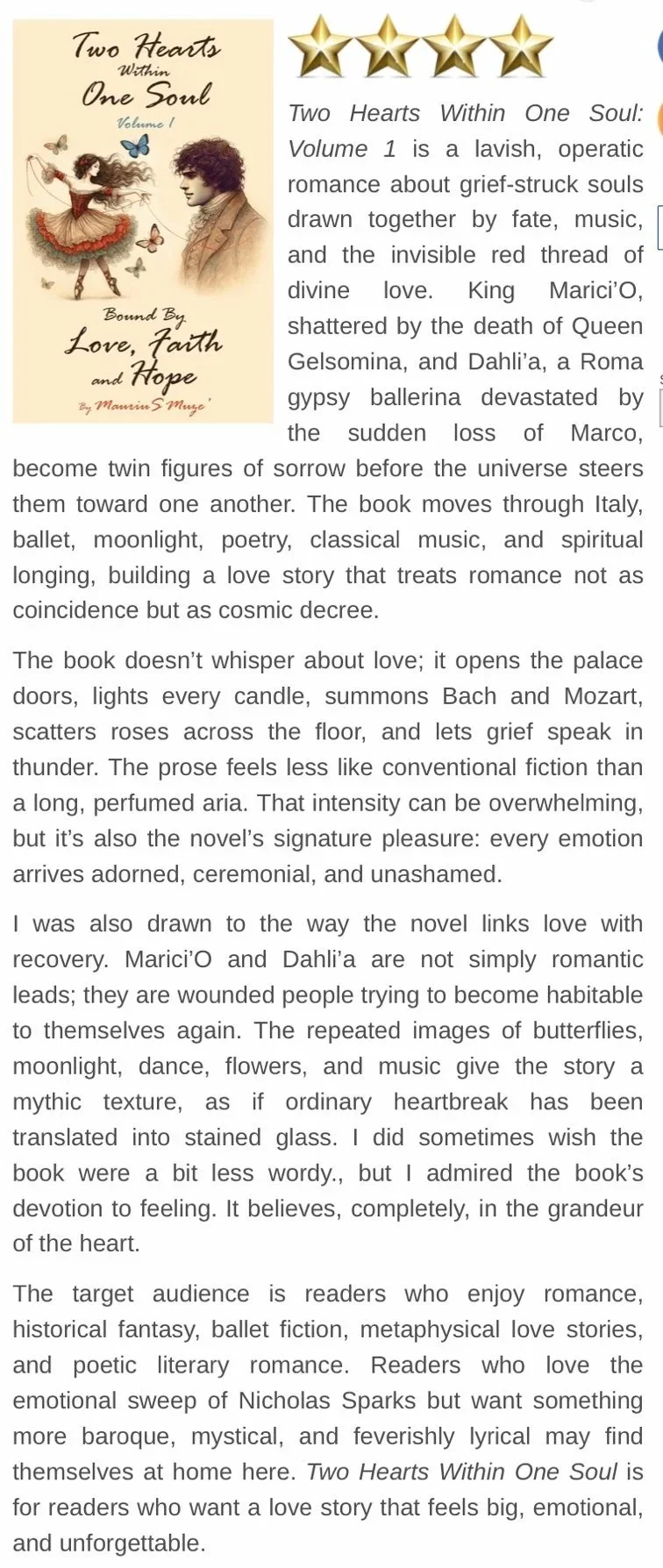
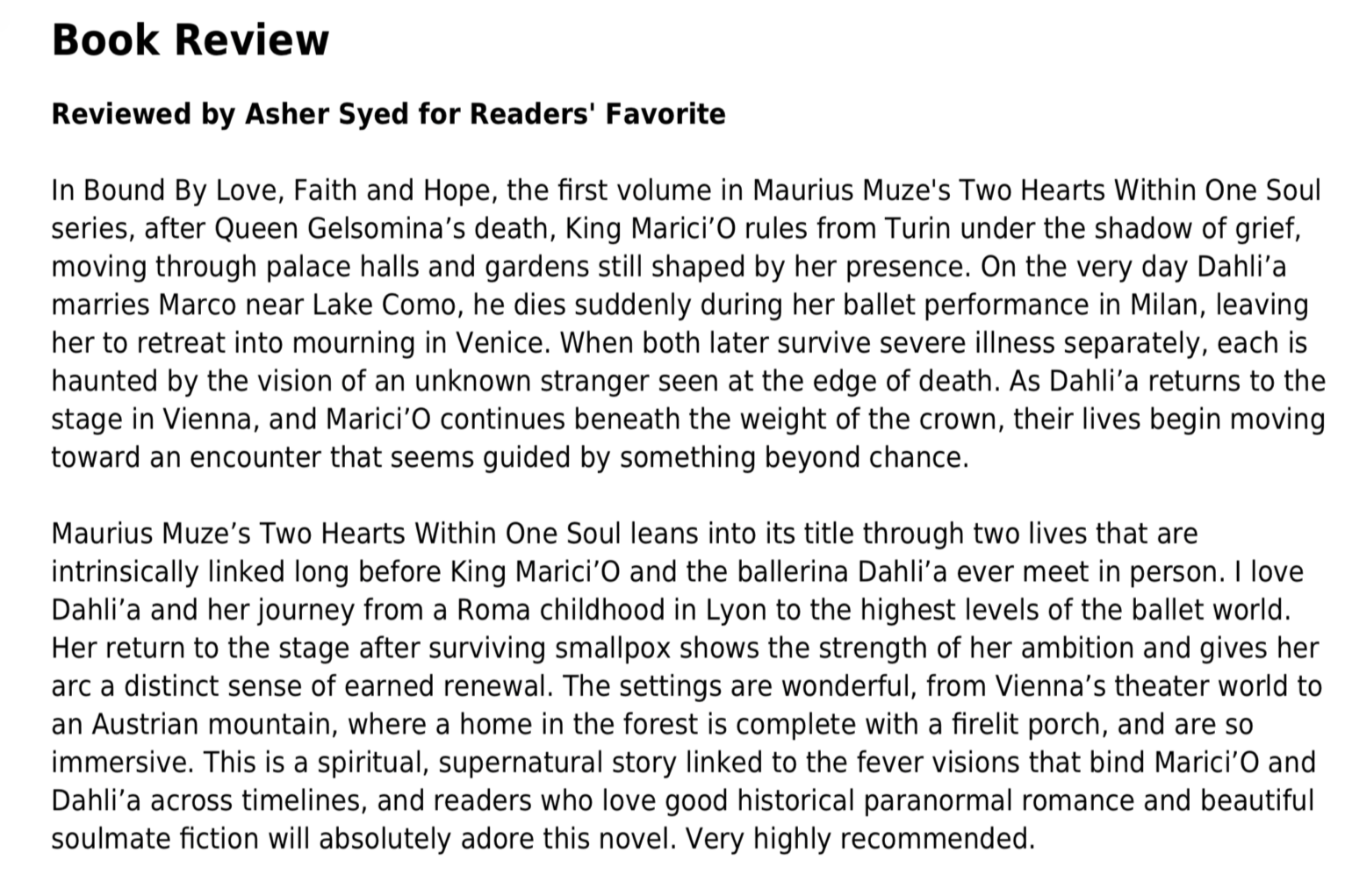
Centuries ago, the gods bound King Marici’O and the ballerina Dahli’a with a single soul, two hearts destined to find one another across lifetimes. Set against the opulent backdrop of eighteenth - century Europe, Marici’O is a grieving king torn by the loss of his queen. Across the continent, Dahli’a, a luminous ballerina, mourns a love she cannot explain - until fate begins to stir.
On the edge of death, their souls meet in a dream, urging one another to fight for life. Neither believes the encounter is real - until a chance performance of Le Papillon in Austria changes everything. Marici’O recognises the ethereal dancer on stage as the woman from his vision. Dahli’a freezes mid - performance when she see the man who once pulled her back from the abyss standing before her.
As dream becomes reality, their bond deepens, defying worlds that separate them: royalty and art, tradition and freedom, past pain and present hope. But love forged by gods came with a cost. Will they surrender the lives they’ve know - or embrace a destiny shaped by divine design?
Book reviews for Volume One
“MariuS Muze’ is a masterful writer. Every page of Two Hearts Within One Soul feels like a waltz through time and memory. Even the characters’ names are poetic and unforgettable. The story captures the agony and wonder of being bound to someone beyond a single lifetime. It’s beautiful, eternal, and utterly timeless. Such love will sweep you away!”
- QUINN JAMISON, author of The Art of Time and the sequel, The Art of Bending Time: A Forbidden Return
Literary Titan review
Volume Two - Two Hearts Within One Soul
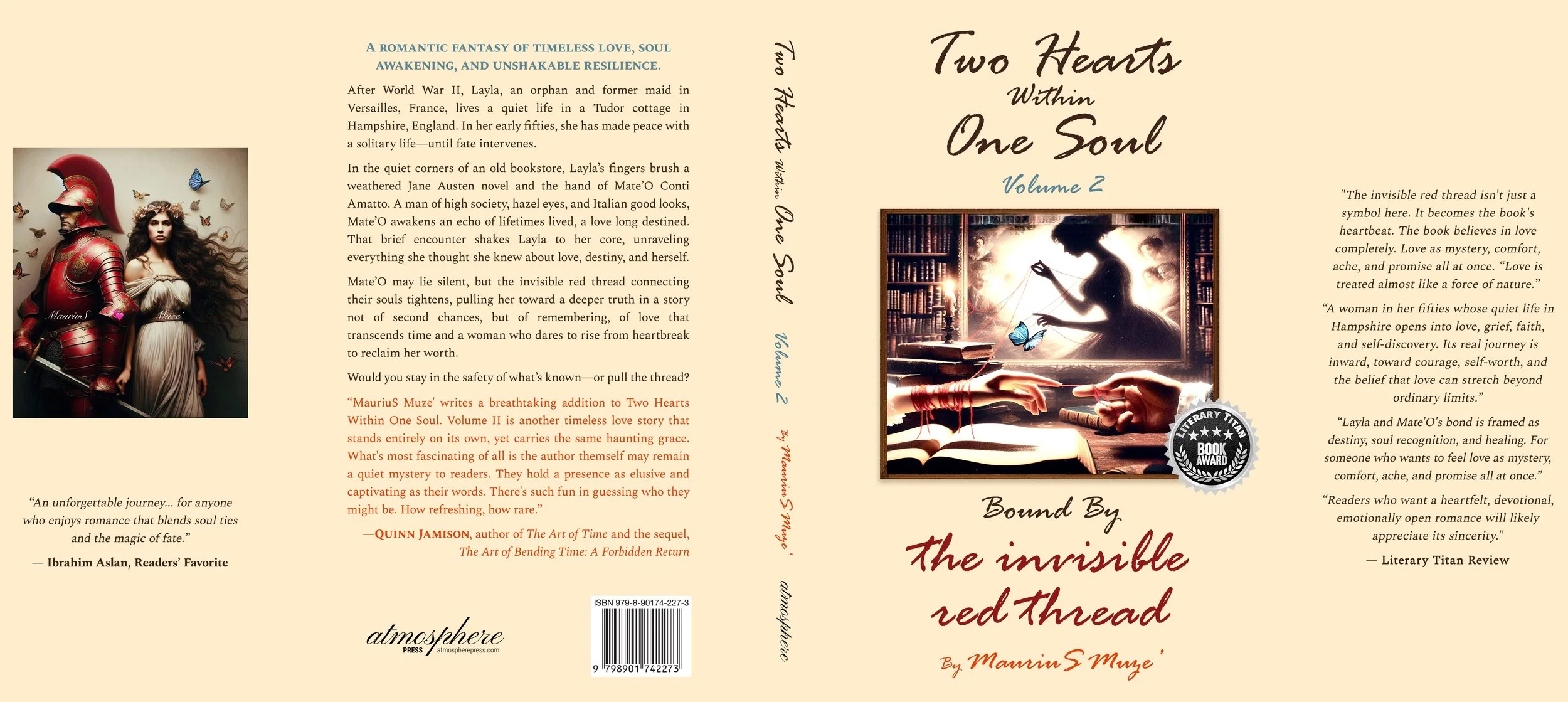
After World War Two, Layla, an orphan and former maid in Versailles, France, lives a quiet life in a Tudor cottage in Hampshire, England. In her early fifties, she has made peace with a solitary life - until fate intervenes.
In the quiet corners of an old bookstore, Layla’s fingers brush a weathered Jane Austen novel and the hand of Mate’O Conti Amatto. A man of high society, hazel eyes, and Italian good looks, Mate’O awakens an echo of lifetimes lived, a love long destined. That brief encounter shakes Layla to her core, unraveling everything she thought she knew about love, destiny, and herself.
Mate’O may lie silent, but the invisible red thread connecting their soul tightens, pulling her toward a deeper truth in a story not of second chances, but of remembering, of love that transcends time and a woman who dares to rise from heartbreak to reclaim her worth.
Would you stay in the safety of what’s known - or pull the thread?
Book reviews for Volume 2
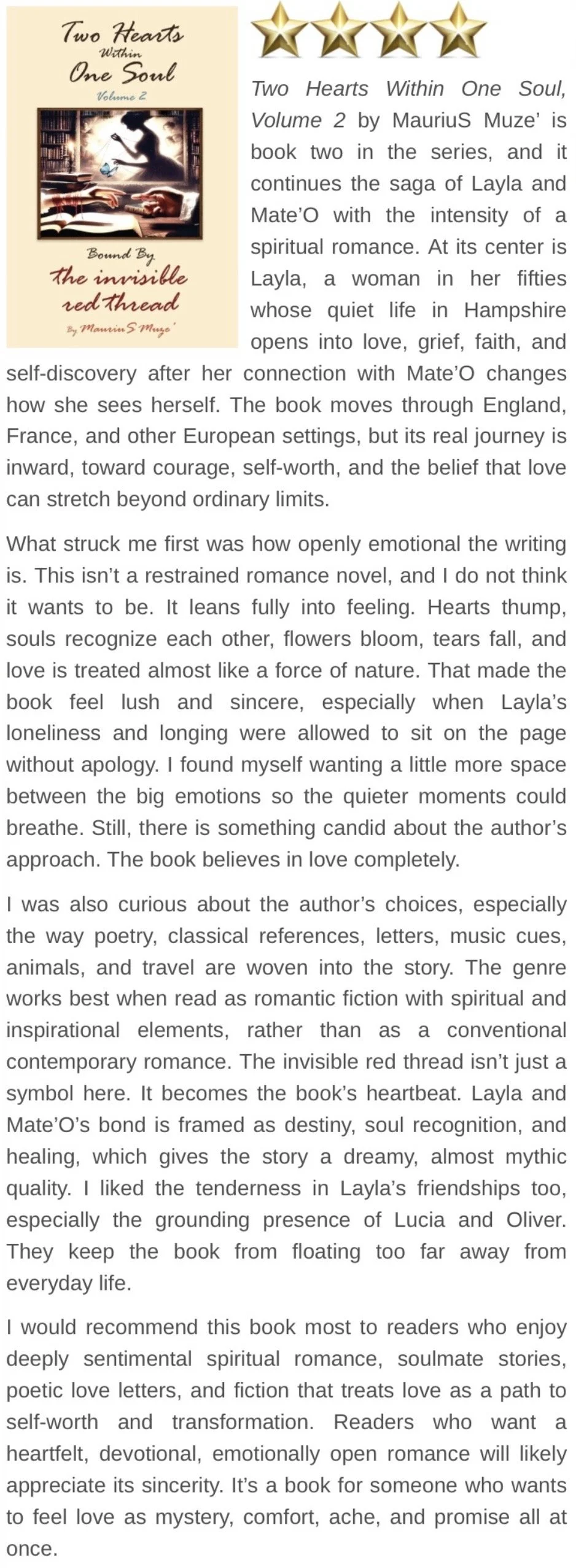
“MauriuS Muze’ writes a breathtaking addition to Two Hearts Within One Soul. Volume 2 is another timeless love story that stands entirely on its own, yet carries the same haunting grace. What’s most fascinating of all is the author themself may remain a quiet mystery to readers. They hold a presence as elusive and captivating as their words. There’s such fun in guessing who they might be. How refreshing, how rare.”
- QUINN JAMISON, author of The Art of Time and the sequel, The Art of Bending Time: A Forbidden Return
Literary Titan review
Two Hearts Within One Soul
Volume 3 to come……
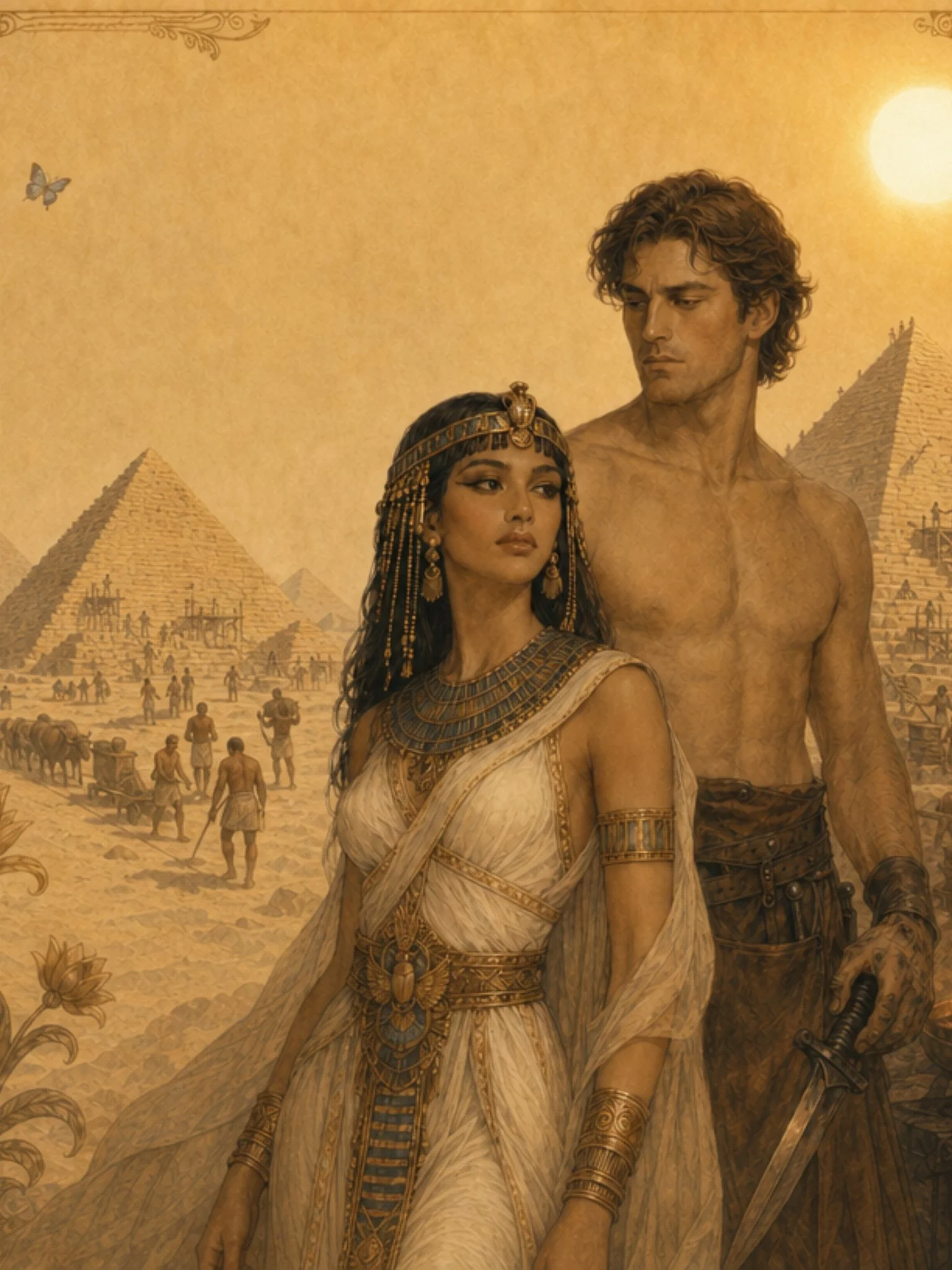
Bound by ♾️ 888…..
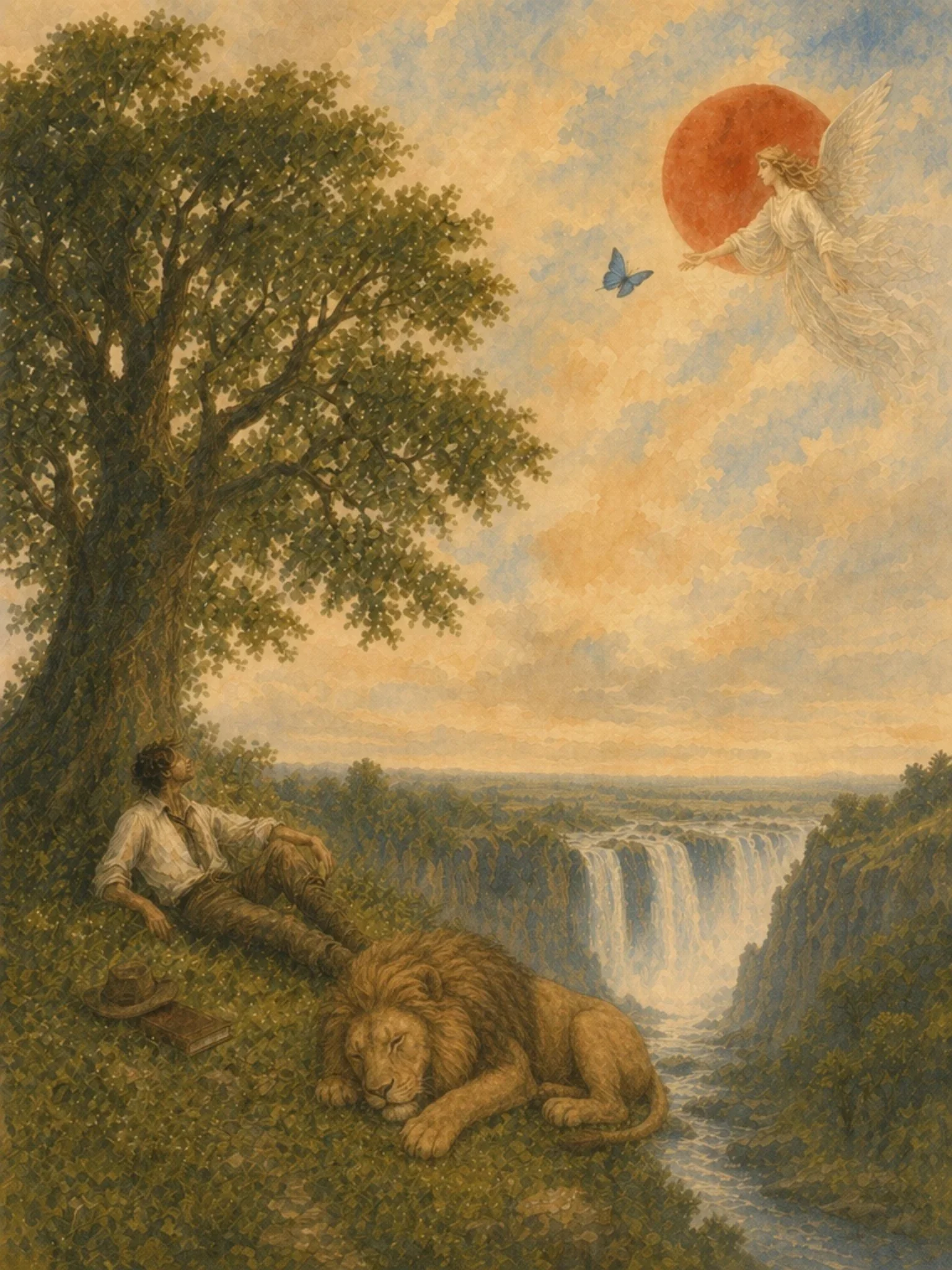
Bound by theanthropic Love…..
“He who searches for his beloved is not afraid of the world.”— (Nizami Ganjavi)
Long ago, before sand and Nile, before kings and grain, there were only the heavens.
In the ancient records of the stars, Ra the Sun and Khonsu the Moon were the original lovers, tethered to opposite realms. Divine law dictated their eternal separation: too much light could scorch the night; too much shadow could drown the sun.
Ra, the sun god, travelled the sky in his golden barque, blazing a radiant path that banished chaos. His brilliance gave life to all that walks, creeps, crawls, swims, or flies, breathing vitality into the waking world. His path was law. In the silence of night, Khonsu—the Traveler—graced the darkness in her silver beauty. With a gentle touch, she put those same life that walking, creeping, crawling and swimming creatures under her sleeping spell. lullabying the world into a quiet serenity. She watched over the earth in absolute stillness before yielding to the dawn.
Yet, as the world turned, they passed each other—just barely. A yearning stirred within Khonsu; she longed for his warmth, a craving that sparked a flame in her gaze before she vanished into another dimension. For a brief, rare moment, the air would shift and the sun would dim. Day and night collided, forming a sacred symmetry: the eclipse of a rare blood moon. It was an impossible moment where the cosmos held its breath—a forbidden path where the unfathomable meeting in the art of love. Though divine laws forbade their union, the universe acknowledged a truth that no love, once entwined by the stars, is truly impossible.
The people of the Earth paused during such a union. The Nile held its breath, sensing the sacred symmetry. For if the Sun and Moon could defy the heavens to touch, then the universe could mend what was once severed.
Under this soft veil of light, on an eighth day of December, the world began not with a whisper, but with a cosmic ache. In the eighth veiled hour, as twilight brushed the world in quiet hues of bruised violet, the universe held its breath on this Devine alignment of 8-8-8.
Prologue
By M. Muze